Obsession Board Game Review

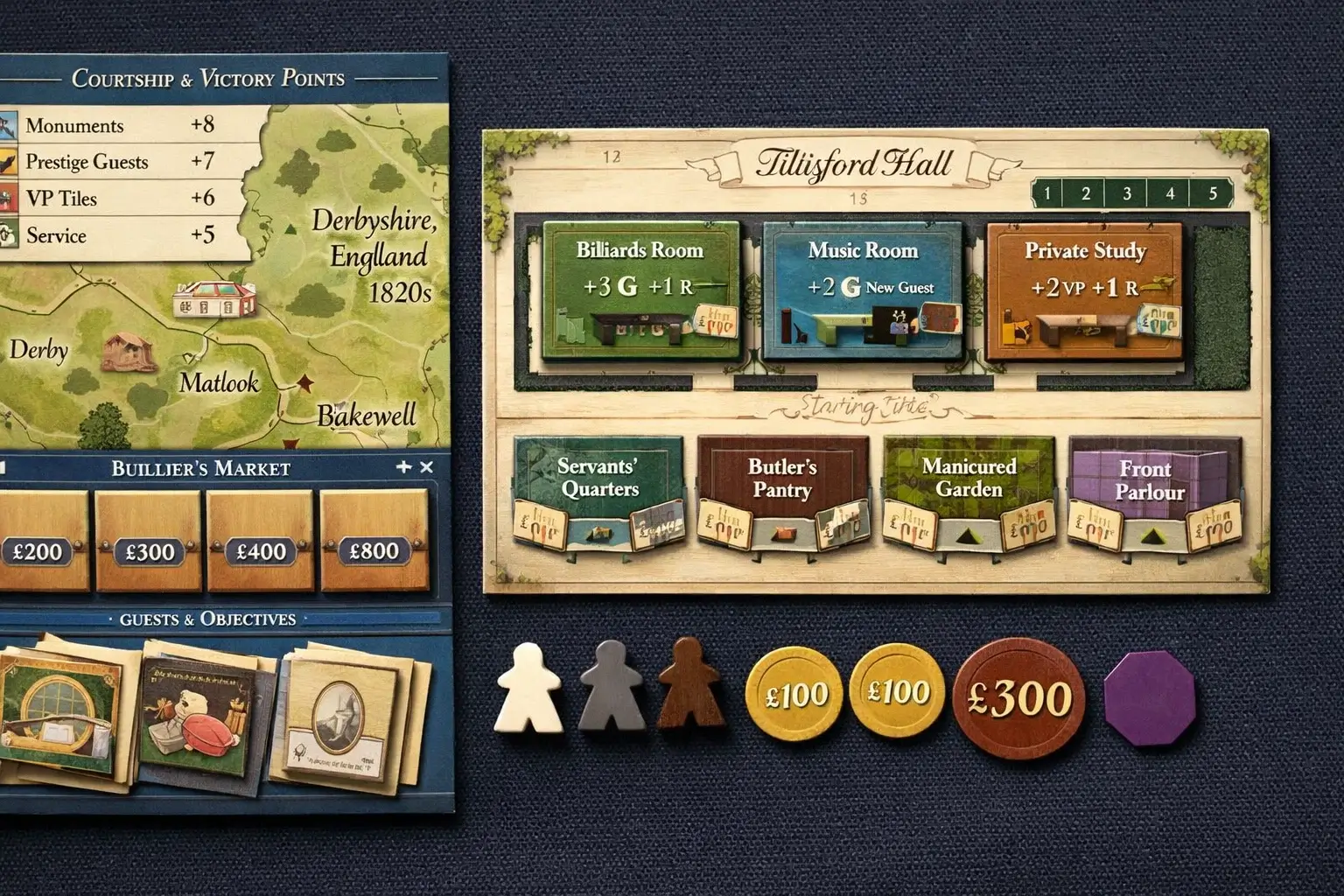
Obsession board game setup with Victorian-era components, cards, and tokens on a table

Looking for a deep strategy board game that feels different? Obsession pulls you into Victorian England, where you rebuild a faded family estate. Host parties, manage guests, and out-plan your rivals. This isn’t about luck, it’s about your clever choices. Our full review breaks down how to play, how to win, and whether Obsession deserves a spot on your game shelf.

For those who enjoy deep, immersive gameplay and thematic experiences, Obsession offers a refreshing challenge. It’s similar to video games like Devil May Cry, where your decisions and understanding of the mechanics determine your success.

What Is Obsession?

Designed by Dan Hallagan, Obsession is a Euro-style strategy board game where each player controls a noble family in decline. The goal is to restore your family’s prestige by hosting social events, upgrading rooms, and hiring servants.

The game revolves around card management and timing, requiring players to carefully decide when to host guests, improve rooms, and optimize resources across multiple rounds. This combination of theme and mechanics is what sets Obsession apart from other modern board games.

Obsession Board Game Review

Obsession stands out for its balance and depth. While the rules may feel complex at first, they become intuitive after a few turns. Strategy plays a much larger role than luck, rewarding players who think ahead and carefully plan their moves.

The game features high-quality production with detailed artwork and well-crafted components. Its replay value is substantial, with each playthrough offering new experiences due to variable setups and different guest combinations. Fans of replayable games will find Obsession holds long-term appeal, much like classic video games that continue to offer fresh content.

How to Play Obsession?

Learning how to play Obsession might seem intimidating, but once you get the hang of it, the flow becomes clear.
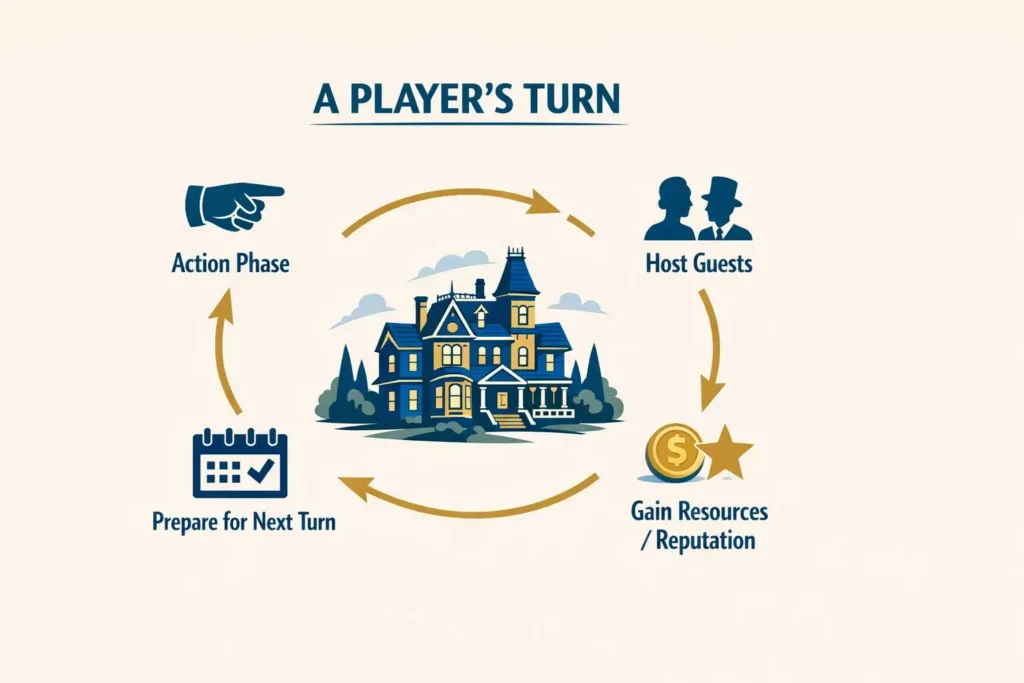
Infographic showing the turn structure and core actions in the Obsession board game
  • Game Setup: At the start, each player receives a basic estate, a small staff, and a set of rooms. The main board is set up with guest decks, servant tiles, and scoring tracks. Event cards determine which guests are available during each season.
  • Turn Structure: Players take turns performing actions like hosting guests, improving rooms, hiring staff, or gathering resources. Hosting guests is the core action, earning both income and reputation points. Timing is key here, as guests leave after each event, and players must plan ahead to replace them strategically.
  • Scoring System: Points are earned through reputation, estate improvements, and fulfilling objectives. The game ends after a set number of rounds, and the player with the highest score wins.

How to Organize Obsession?

A little organization goes a long way in speeding up your Obsession setup and enhancing the overall experience.
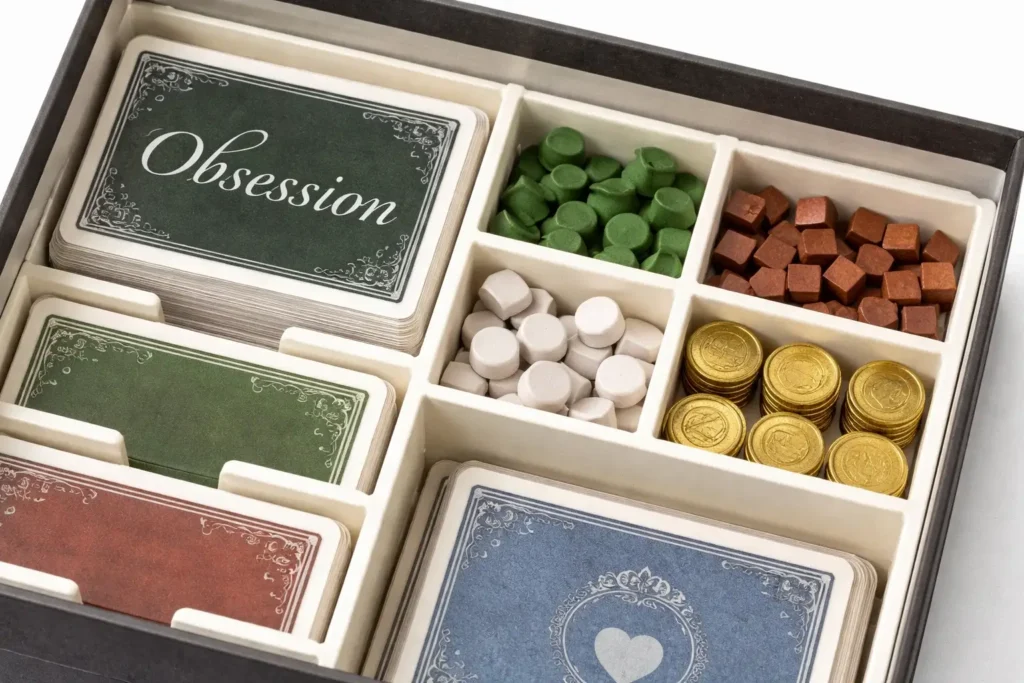
  • Card and Component Storage: Sorting cards by type and using labeled bags can save you time when preparing the game. Keeping guest decks separate helps speed up setup, allowing for a smoother start.
  • Using Inserts and Organizers: Custom inserts or organizers are useful for neatly storing tiles, cards, and tokens. A good organizer can reduce setup time by half, allowing for more efficient play.
  • Setup Tips for Faster Play: After each session, pre-sorting components and keeping commonly used items in the same spot can help make future setups quicker. The more you organize, the smoother your next game will be.
Organized Obsession board game box with custom inserts for cards, tokens, and components

Obsession supports 1 to 4 players, with the best experience typically at 2 or 3 players. While playing with 4 players can lengthen the sessions, it still remains a fun and engaging experience.

For newcomers, the Upstairs, Downstairs expansion is the best choice. It adds depth to the gameplay without overwhelming new players. For those with more experience, advanced expansions offer additional strategic options and complexity.

Although there’s no official digital version of Obsession yet, players can use tabletop simulator platforms to play the game online. While these digital versions capture the core gameplay, they can’t replicate the tactile experience of the physical game.

Obsession first gained attention through a successful Kickstarter campaign, which helped fund the game’s high-quality components and expansions. The campaign was praised for its transparency and strong community engagement, building a loyal fanbase that supported the game’s ongoing development.

Obsession is a great choice for strategy lovers who enjoy deep, thematic experiences. While it may initially challenge casual players, its replayability, strategic depth, and expansions make it a worthwhile investment.

Final Verdict

With its engaging theme, strategic depth, and high replayability, Obsession is a standout in the world of strategy board games. It may require some effort to learn and organize, but the payoff is a rewarding and immersive experience. Fans of Euro-style games and solo-friendly titles will find Obsession a satisfying addition to their collection.


Similar Posts