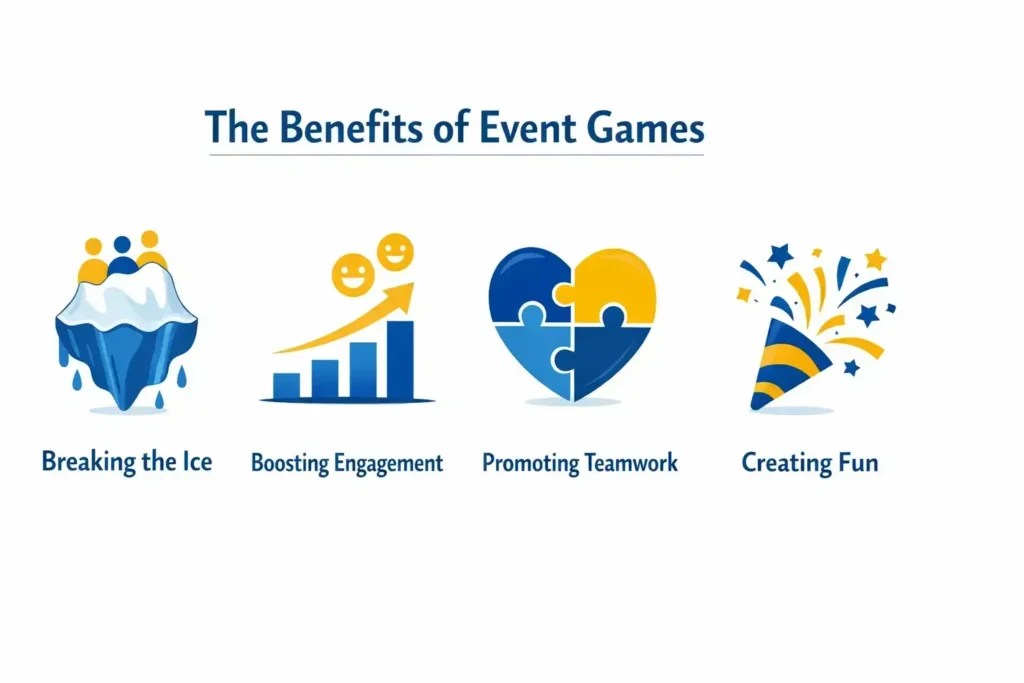
Event games are an essential tool for enhancing the atmosphere of any gathering. Whether you are hosting a wedding, corporate event, or casual party, incorporating games into your event planning can elevate the experience from ordinary to exceptional. Games create opportunities for interaction, foster teamwork, and most importantly, introduce an element of fun that resonates with all guests. They break the ice, encourage guests to mingle, and ensure everyone is fully engaged.
Different types of event-based games can transform your gathering into a memorable occasion. From icebreakers to team-building challenges, we will explore why these games are so impactful and how you can strategically incorporate them into your event. By the end, you’ll be equipped with the knowledge to create lasting memories for your guests that make your event one they’ll never forget.
What Are Event Games?
Event games are activities designed to entertain and engage people during events. These games can vary in complexity, ranging from simple icebreakers to more intricate team-building exercises or even virtual activities. The main goal of these games is to get people involved, make them feel comfortable, and ensure they have a great time. Depending on the type of event and the guests’ needs, these games can be physical, mental, or virtual.
In essence, these games break the monotony and encourage guests to interact with one another in ways that regular conversations might not allow. They also provide opportunities for participants to showcase their skills, creativity, and sense of humour in a relaxed setting.
Types of Event Games You Can Use
There are many types of games, and choosing the right one depends on the nature of your event, the space available, and the preferences of your attendees. Below are some popular types of event-based games and their benefits.
Icebreaker Games: Starting Conversations
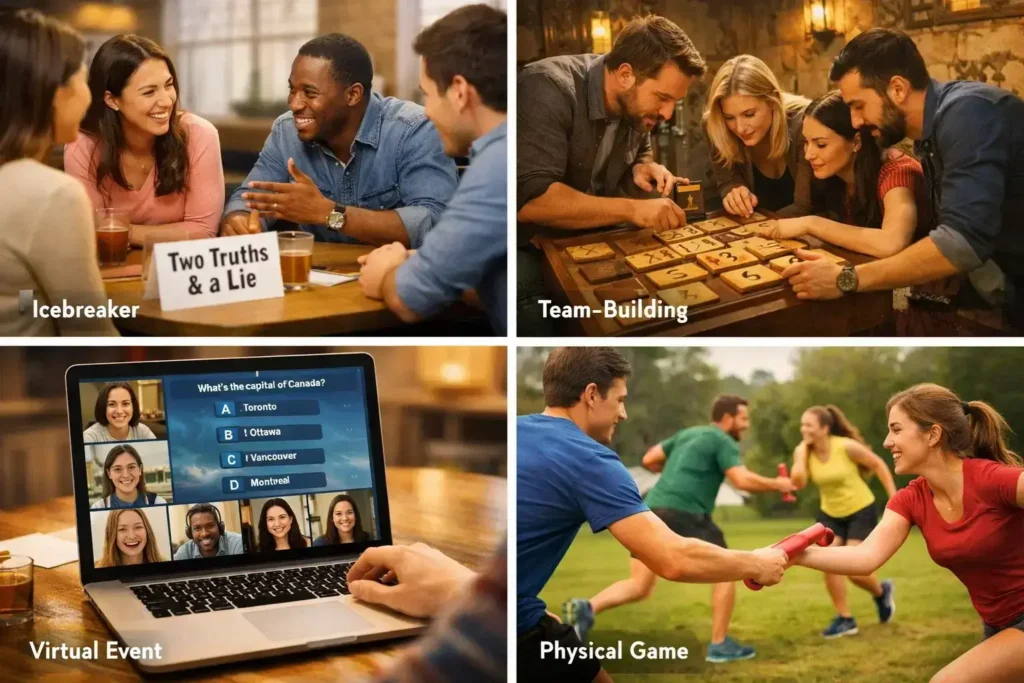
Icebreaker games are perfect for events where people may not know each other well, such as business conferences, workshops, or social gatherings. These games allow guests to introduce themselves in a non-threatening, fun way. Here are some examples:
Team-Building Games: Collaboration and Problem-Solving
Team-building games are ideal for corporate events, team retreats, or any event that focuses on cooperation and communication. These games improve teamwork and trust, which are essential in both personal and professional relationships. Some examples of team-building games include:
Team-building games foster cooperation, critical thinking, and strategic planning, all while having fun.
Physical Games: Get Everyone Moving
Physical games are perfect for outdoor or large events where you want to get people moving and energise the atmosphere. These games are great for family reunions, company picnics, or any event that allows for active participation. Here are a few ideas:
These physical games create a lively, fun atmosphere and help your guests bond over a shared challenge. For family gatherings, camping games like relay races or off-the-couch games can add fun and energetic competition for all ages.
Virtual Event Games: Engaging Remote Participants
In today’s world, many events are hybrid or fully virtual. For these types of events, you’ll need to find ways to engage remote participants. Virtual games provide an excellent way to keep online attendees active and involved, ensuring they don’t feel disconnected from the event. Some popular virtual event based games include:
Virtual games make remote participants feel like they’re a part of the event, even if they’re not physically present. These are especially great for long-distance couples online to feel involved in a shared experience, no matter the distance.
Competition-Based Games: Adding a Competitive Edge
Adding a competitive element to your event can make it more thrilling. Competition-based games motivate participants to engage fully in the event. These games are excellent for creating excitement and energy, and they work well for both formal and casual events. Some examples of competition-based games include:
These games not only add energy to your event but also encourage participants to show off their skills.
Interactive Games: Using Technology for Fun
Technology has opened up new ways to make these games more immersive and interactive. Interactive games use digital tools to enhance the experience and engage attendees in new ways. Some examples include:
How to Choose the Right Event Games?
Choosing the right event based games is essential to ensure your guests have a great time. The games should match the vibe of the event and cater to the preferences of the attendees. Here are some key factors to consider when selecting games:
Know Your Audience
When choosing games for your event, it’s important to consider who will be attending. If your guests are mainly professionals, you may want to select team-building or problem-solving games. For family-friendly events, consider games that encourage physical activity or provide entertainment. Understanding your audience’s interests is key to choosing the right games. For example, Mother’s Day or Lunar New Year games are perfect for themed events.
Consider the Space and Setting
The size and layout of your event space will also impact the types of games you can include. For large outdoor venues, physical games like relay races or tug of war are ideal. In smaller indoor spaces, games like trivia or icebreaker activities work well. Make sure the games fit the environment of the event and can be played safely.
Set Clear Rules
Ensure that the rules of the game are simple and easy to understand. Complicated instructions can confuse and frustrate guests, taking away from the fun. Provide a brief explanation of the rules at the beginning of the game, and make sure everyone knows how to participate.
Offer Prizes
Prizes can add an extra layer of excitement and motivation for participants. You don’t need to give away expensive items; small tokens like gift cards or trophies can go a long way in making people feel appreciated and motivated.
FAQs
Conclusion
Event games are a great way to make any gathering fun and interactive. If you’re planning a wedding, a work event, or a casual party, adding games can make it more special. Games help people feel comfortable, get them involved, and keep the energy high. They also create a lively atmosphere where guests can enjoy themselves and connect with others.
By picking the right games for your guests and the type of event, you can create an unforgettable experience. Icebreakers, team challenges, or friendly competitions will make your event exciting and leave everyone with happy memories. These games also help people bond, ensuring they’ll talk about the event long after it’s over.